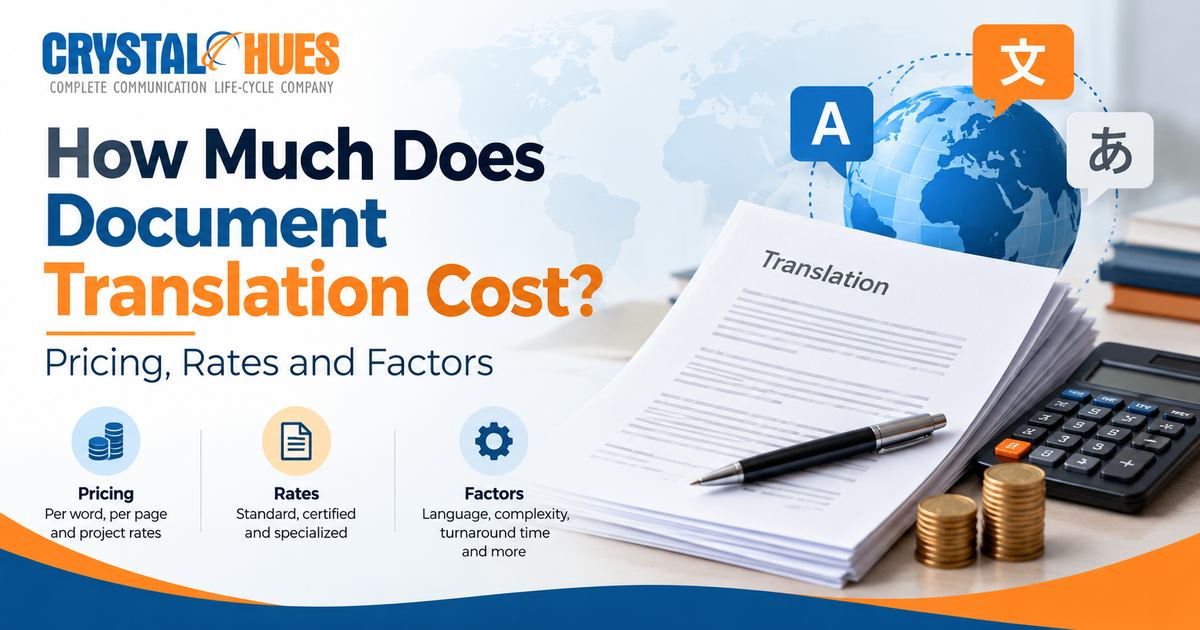
How Much Does Document Translation Cost? Pricing, Rates and Factors
Introduction
Catering to a market as large as US requires
a professional and efficient document translator where pricing is a vital cog
in the overall process.
Document translation cost depends on a handful of factors: the language pair, the word
count, the complexity of the subject, any certification, the formatting
involved and how fast you need the work. Every document is different, so there
is no single fair price, and any figure that ignores these details deserves a
second look.
This guide explains how document translation pricing works, what shapes the final number and how to compare quotes fairly.
How Is Document Translation Priced?
Providers usually follow one of four
models. Per word pricing multiplies a rate by the number of words, and it is
the most common way to quote the cost of translating documents. Providers
differ on whether they count source or target words, so ask. Per page pricing
gives a set figure for each page, which suits short, standard files such as
certificates. Per document pricing sets one fee for a common document type, and
project-based pricing covers larger or mixed jobs, such as a set of contracts
that also needs formatting and review.
Definitions vary. One provider’s page may mean a fixed number of words, while another counts physical pages, so translation cost per page can look very different for the same file. Some providers also apply a minimum project charge. Compare what each figure includes, because document translation rates only mean something when you read them next to the scope.
7 Factors That Affect Document Translation Cost
Language Pair and Language Availability
Common pairs such as English and Spanish
usually have a deep pool of qualified linguists. Less common pairs have fewer,
which can affect both the rate and the timeline.
Word Count, Document Length, and Layout
More words mean more work, and dense
layouts with tables, footnotes and forms take extra handling. Ask how a
provider treats large volumes before you decide.
Subject Matter and Terminology
Complexity
Legal, medical, financial and technical
files need linguists with subject knowledge and a careful terminology review.
That added expertise can shape the quote.
Certification and Recipient Requirements
If an agency, court, university or embassy
asks for a certified translation or other formalities, the scope of work
changes.
Turnaround Time and Urgent Delivery
A standard timeline lets a team translate
and review in sequence. Urgent document translation cost can differ because the
job may need extra people or scheduling.
File Format, Desktop Publishing, and
Formatting
Editable files are simple to handle.
Scanned pages, PDFs and design files often need extra steps, so the translated
version matches the original layout.
Editing, Proofreading, and Quality
Assurance
A second linguist who reviews the work and checks names, numbers and terminology is part of a reliable process, so look for it in every quote. For the full workflow, read our guide to the document translation process.
What Should a Translation Quote Include?
A good quote states its scope clearly.
Check for these items:
- The language pair and how words or pages are counted
- The word or page count and what is included in it
- Whether certification is included and what the statement covers
- Formatting and layout work
- Editing and review steps
- Delivery format and turnaround
Ask the provider to confirm these points in writing, and never assume an item is covered.
Standard vs. Certified Document Translation Cost
Certification can change the scope of a
project, because the provider adds a signed statement about the translation,
and some recipients have specific wording or format needs. It can influence the
price, but every provider handles it differently, so the final figure comes
from the quote.
For US readers, the rules depend on who receives the document. For example, USCIS regulation 8 CFR 103.2(b)(3) requires a full English translation that the translator has certified as complete and accurate, along with a statement that the translator is competent to translate from the foreign language into English. The regulation never mentions notarization, though other recipients may ask for it. Always confirm the requirements with the receiving agency, court or school before you order, so you pay for the right service the first time.
How to Compare Translation Quotes
Translation Quotes comparison is important
to give a clear picture to customers. We can put quotes side by side on the
same scope: the same language pair, count basis, review level, certification,
formatting and deadline. Then look at the quality review, confidentiality
practices and delivery format. The lowest quote may leave out steps that others
include, and a higher price never guarantees quality by itself.
Ask each provider how its team reviews work and handle your files and favour the one that explains its process clearly. For a wider view of what a provider can cover, see our professional translation services.
How to Get an Accurate Document Translation Quote
The most accurate price comes from a quote
based on your real document. Have these details ready: the source file, the
target language, the purpose of the document, any recipient requirements, the
word count if known, formatting needs and your deadline.
Crystal Hues’ quote form asks for the
service you need, your source and destination languages, an approximate word
count and the domain of your document, such as legal, medical, finance, IT or
engineering. It returns an approximate estimate, and a representative follows
up by phone or email to confirm the details. You can request a document
translation quote in a few minutes.
Frequently Asked Questions
How much does it cost to translate a
document?
Costing depends on various factors like
word count, language pair, certification and turnaround. A quote based on your
actual file is the only reliable way to know.
Is translation priced per word or per
page?
Both are common, along with per document and project-based pricing. Per word is
the most frequent, so ask how words or pages are counted.
Does certified translation cost more?
It depends on the scope and price of
provider so it’s better to confirm the quote beforehand.
Does language pair affect the price?
Yes. The availability of qualified
linguists for a language pair can affect both the rate and the timeline.
Can urgent translation affect the quote?
Yes. Prices will rise as short deadlines
needs extra resources.
How can I get an accurate quote?
To get an accurate quote, share the file, the languages, the purpose of the document, any recipient requirements, the formatting needs and the deadline.
Conclusion
Document translation cost comes down to a
few clear factors: the language pair, word count, subject complexity,
certification, formatting and turnaround. That is why the most accurate price
comes from a quote based on your actual file and requirements.
Efficiency also affects cost. Fewer
handoffs between vendors usually mean fewer delays and fewer corrections. Crystal
Hues has provided language services for 37 years, and because translation,
desktop publishing, proofreading and localization sit under one roof,
formatting and review can be handled by the same team. Share your document
details through the Crystal Hues quote form, and our team will respond with a
clear estimate.