French Speaking Countries in Africa
The emergence of Africa as a key strategic
and cultural power of Asia traces backs its roots to the unique linguistic
diversity it offers.
Africa is
home to one of the most layered language stories on the planet, and French sits
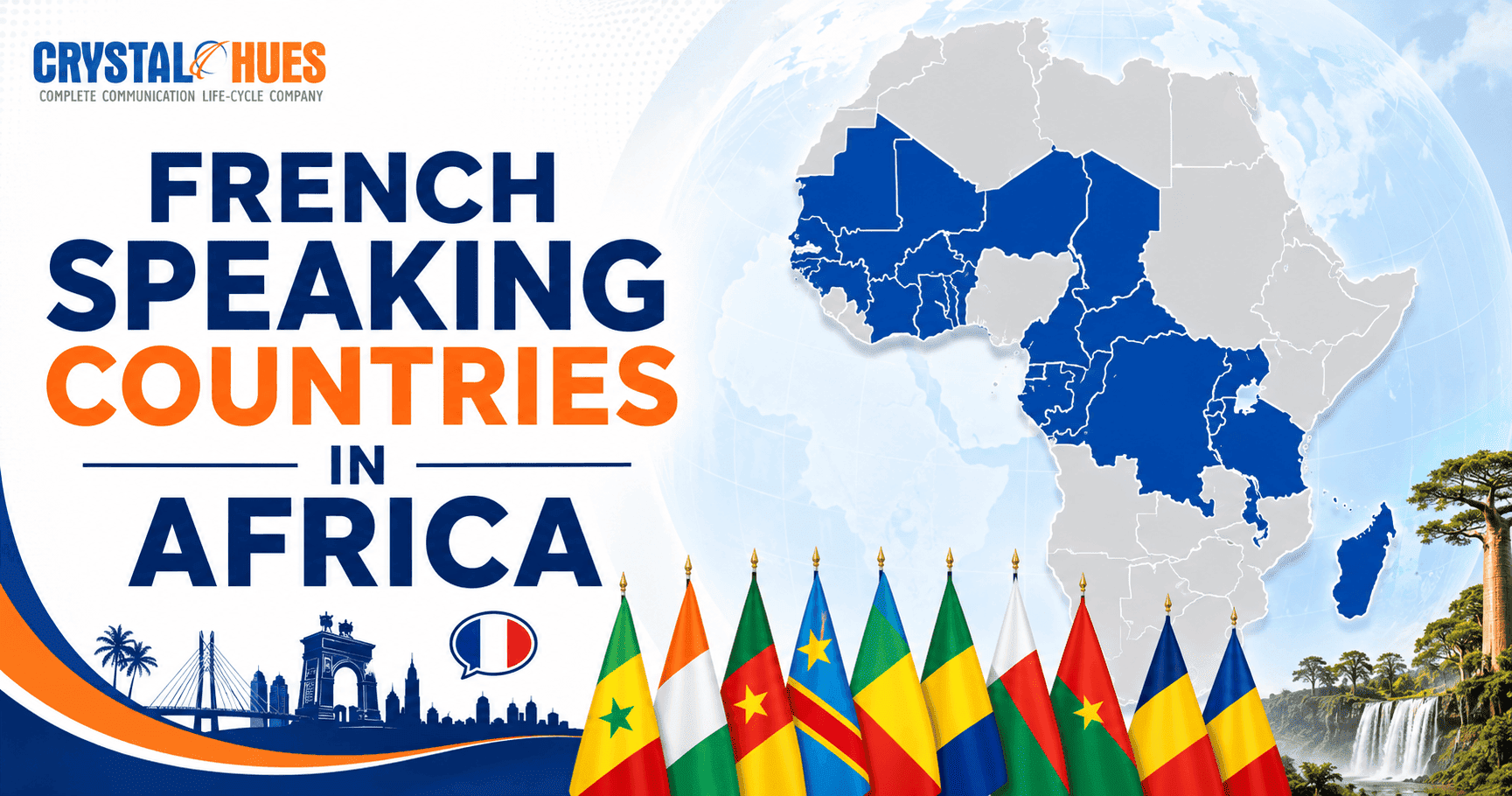
at the heart of it. More than 25 countries in Africa speak French and
The Democratic Republic of the Congo is the most populous Francophone nation in
the world, ahead of France itself, a fact that surprises many people outside
the continent. From the markets of Dakar to the universities of Kinshasa,
French links millions of people across cultures, borders, and generations,
making it one of Africa's most influential shared languages today. The
continent is now home to the world's largest French speakers, and that share
keeps climbing as populations grow and schooling expands across French speaking
nations.
Why is French Spoken in Africa?
The colonial takeover of Africa by French and Belgium sets the backdrop of French language in Africa. During the 1950s and 1960s, as independence movements swept across the continent, numerous newly formed nations opted to retain French as an official language for use in government, education, and business. It provided a functional shared system capable of bringing together populations speaking dozens of local languages within one nation, thereby minimizing the tensions commonly arising from significant ethnic and linguistic diversity. In many former colonies, bilingual and trilingual education became widespread, with French often taught alongside native languages starting from primary school. Gradually, French expanded from government buildings and schools into media, commerce, and seeping into daily life in major urban areas across much of the continent, transforming into a uniquely African language rather than merely a relic of colonial rule.
Which Countries Speak French?
It’s common to think of France first and
foremost-after all, French originates in France! However, French is the
official or most popular language in more than twenty countries around the
world, in addition to the country from which it originally sprang. It also
shares that designation in many other places.
Let’s look at the largest clusters of
French usage, starting in Western Africa with Senegal, Ivory Coast, Benin,
Togo, Guinea, and Mali using French in schools, administrative and legal
services and to communicate among different languages groups.
You’ll enjoy hearing French spoken by
citizens of some of the liveliest urban cities: French from Dakar, Senegal to
Ivory Coast’s Ivory Coast.
These and many others speak a unique form
of African French that mix into French official spoken language during school,
in school for some grades, in school for many of them at their careers and the
public’s at some extent. We continue then toward Central Africa and into Africa
‘s other regions like Gabon, Cameroun and etc., where they have a dual language
tradition as French is one of its official languages just as much as English in
Cameroon, the largest African state which can also be heard throughout the
continent from Democratic Republic of Congo to Mauritania. In Africa ‘s Maghreb
region, Algeria, Tunisia, and Morocco all use Arabic but you will hear French
frequently in commerce, politics, science and education, and at the university
in both private and public circles.
In countries like Djibouti, Rwanda, and
Burundi, French is used in administration, education, and diplomacy often
alongside English and local languages. Its presence highlights continued growth
beyond traditional Francophone regions.
French as a Binding Factor
Africa has a vast French speaking
population spanning across ethnic and linguistic groups. The role of French in
serving Africa is immense and multidisciplinary. Let’s look at the sectors it
influences enhancing the economy and the society at large.
Regional cooperation: French gives neighbouring nations a common working language for
diplomacy, trade agreements, and joint development projects, smoothing
collaboration across borders that often divide dozens of ethnic groups and
easing coordination within regional bodies that span multiple Francophone
states.
Education systems: Curricula across Francophone Africa share structural roots, allowing students, teachers, and researchers to move between countries and institutions with far fewer barriers, while shared examination standards and textbooks help maintain consistent academic quality across borders.
Cross border business: Companies trading across West and Central Africa rely on French for contracts, branding, and customer communication, turning a shared language into a genuine commercial advantage when entering new markets without needing to rebuild messaging from scratch in every country.
Cultural exchange: Music, cinema, and literature travel easily between French speaking nations, letting artists from Dakar, Abidjan, and Kinshasa reach audiences far beyond their home countries and reinforcing a shared cultural identity that spans the continent.
International diplomacy: French remains a working language of major global institutions,
giving Francophone African nations a louder, more coordinated voice on the
world stage and strengthening their influence within international forums and
negotiations.
Conclusion
French is alive and well in the markets,
schools, halls of government, and in popular culture across dozens of countries
and enhances and connects a multitude of different cultures.
Businesses and language providers who are
working in these markets will benefit greatly from understanding these
linguistic landscapes, as effective communication and trust are shown to
outlast any generic translation, by far and meet the expectation and intent of
the brand.
Language service providers provide
strategic guidance in bridging the gap between the brand's intent and the
audience's expectation, turning Africa’s linguistic diversity into a valuable
business resource, rather than an insurmountable barrier. The story of French-
speaking Africa continues to produce new chapters every year, making it
essential reading for those studying global communications, considering
expanding to a new market, or are simply curious about languages from around
the world.
Frequently Asked Questions
1 Which is Africa's largest French speaking country?
The Democratic Republic of the Congo is the
most populous Francophone nation in the world
2 How many countries in Africa speak
French?
In totality, more than 25 countries speak
French in Africa.
3 Is French the official language in all
African countries?
No, French is not the official language in
all African countries. People use it as a local language.
4 Why is French still widely spoken
across Africa today?
Due to colonial history and the binding
factor of French across cultures, it is spoken in large parts of Africa
5 Did any African countries stop using
French as an official language?
Yes, Mali, Burkina Faso, and Niger each
removed French from official status in recent years, choosing to promote
indigenous languages instead, though French remains widely used in daily life.