Semantic Annotation vs Sentiment Analysis: Explained
Understanding the Subtleties
Ask ten AI teams to define semantic
annotation and sentiment analysis, and you will likely get ten different
answers, several of them wrong. The two terms get used almost interchangeably
in project briefs, RFPs, and vendor calls. That confusion costs team’s real
money, because they end up buying the wrong dataset for the problem they have.
Here is the distinction, explained plainly, along with a simple way to decide which one your AI project needs.
What is Semantic Annotation?
Semantic
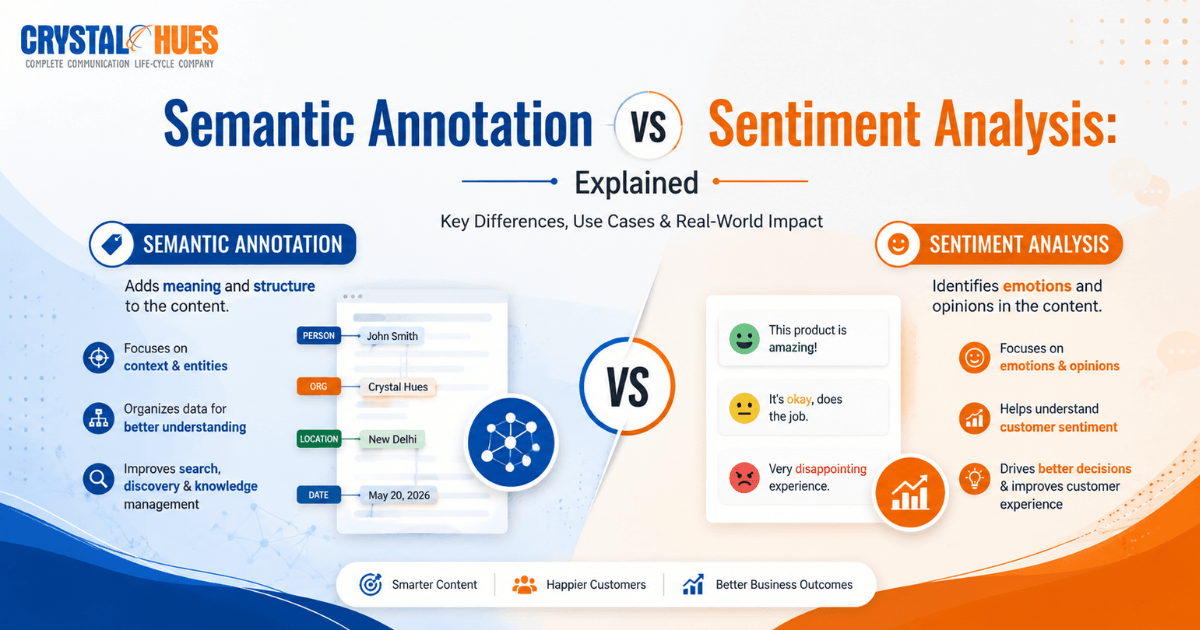
Annotation is the broader discipline. It teaches an AI system what a piece
of text means, structurally and contextually. It also includes identifying
entities such as people, companies, and dates, tagging the intent behind a
sentence, mapping how words relate to each other, and resolving what a pronoun
refers to a few sentences later.
Think of semantic annotation as giving your AI grammar, geography, and general knowledge all at once. A contract, a clinical note, and a customer email all carry meaning that a machine cannot parse on its own. Semantic annotation is the layer that makes that meaning legible.
What is Sentiment
Analysis?
Sentiment Analysis is narrower and far more specific. It teaches an AI system how a
person feels about what they are describing. Positive, negative, or neutral is
the starting point. The deeper work involves tagging intensity, detecting
sarcasm, and classifying specific emotions like frustration, trust, or delight,
often against a full emotional model rather than a simple three-way scale.
Sentiment analysis also goes granular in ways general text understanding does not. A single product review might carry a positive sentiment toward battery life and a negative one toward customer support, in the same paragraph. Capturing that level of detail requires purpose-built annotation, trained specifically to catch emotional nuance across cultures, languages, and even irony.
Why the Two Get Confused
Here is the honest answer, and it comes
from how these services work in practice, not just in theory. Sentiment tagging
is technically one output of semantic annotation. When a linguist marks up
intent and entities in a sentence, sentiment often gets tagged alongside it as
a basic layer.
The confusion starts when a team assumes that basic layer is enough. A general semantic annotation pass will catch surface level sentiment. It will likely miss sarcasm, mixed emotions within a single sentence, or the specific difference between mild irritation and genuine anger. That gap matters enormously for anything customer facing, where getting the emotional read wrong is worse than getting no read at all.
How to Decide Which One You Need
A simple question settles most of this. Are
you trying to help your AI understand what was said, or how the speaker felt
about it?
If your model needs to extract entities
from contracts, map relationships in clinical notes, or power a search engine
that understands query intent, semantic annotation is the foundation you need.
It builds the structural backbone that everything else sits on top of.
If your model needs to gauge customer mood,
flag an angry support ticket before it escalates, or track brand sentiment
across social platforms in multiple languages, you need dedicated sentiment and
emotion annotation. General semantic tagging alone will leave you guessing on
the cases that matter most.
Many serious AI projects need both, layered together. A customer support AI, for example, benefits from semantic annotation to understand what the customer is asking, paired with sentiment analysis to catch how urgently or emotionally they are asking it.
A Quick Example, Using the Crystal Hues Workflow
Picture an e commerce brand that wants its
AI to read thousands of product reviews accurately. Here is how Crystal Hues
runs that project, combining both services in sequence.
First, native linguists apply Semantic Tagging:
identifying the product, the specific attribute under discussion such as
battery life or delivery time, and the reviewer's intent, whether that is a
complaint, a question, or praise.
Next, a specialized Sentiment and Emotion
pass reads the same review for polarity, intensity, and tone, catching
frustration about slow shipping, satisfaction with build quality, or sarcasm
buried inside an otherwise polite sentence. Multiple annotators cross check
every batch before the client receives structured, model ready data.
Skip the semantic layer, and the model
struggles to organize what is being discussed. Skip the sentiment layer, and it
organizes the discussion perfectly while missing the customer's actual mood
entirely.
Running both in sequence makes the dataset usable rather than just accurate.
Conclusion
Semantic annotation and sentiment analysis
solve different problems, even though they often sit side by side in the same
pipeline. One teaches your AI what is being said. The other teaches it how the
speaker feels about it. Knowing which one your project needs, before you
commission a dataset, saves both budget and rework later.
Crystal Hues
builds both as dedicated, specialized services rather than folding sentiment
into a generic annotation pass, because emotional nuance and structural meaning
deserve separate expertise.
If your AI model needs to understand context, emotion, or both, talk to us about a semantic annotation or sentiment and emotion analysis engagement built around your actual use case.
FAQs
1 Is sentiment analysis part of semantic
annotation?
Basic sentiment tagging often happens as one
layer within semantic annotation.
Deeper emotional analysis, including sarcasm and intensity, generally
needs a dedicated sentiment and emotion annotation passes for accuracy.
2 Which one should I start with?
Start with semantic annotation if your
model needs to understand structure and intent first. Add sentiment analysis
when emotional accuracy directly affects your product, such as customer support
or brand monitoring.
3 Can one vendor handle both?
Yes, provided the vendor runs separate,
specialized workflows for each rather than treating sentiment as an
afterthought inside a general annotation pass.