What Is Interpretation in Translation? Types, Process, and When You Need an Interpreter
Introduction
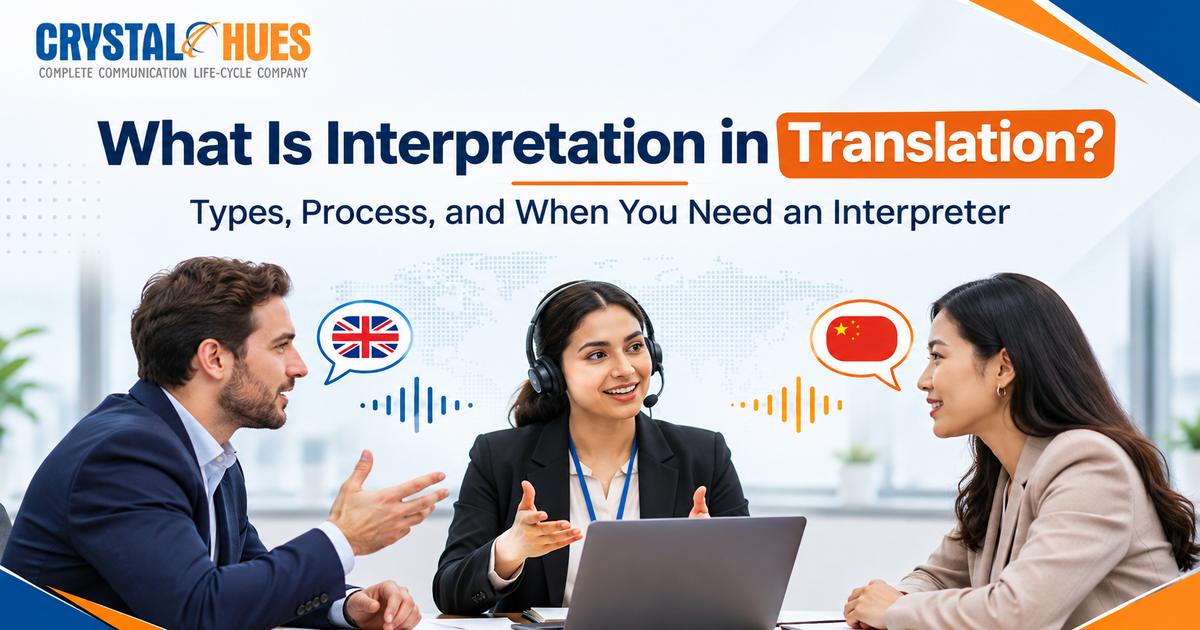
We often see interpreters at international summits and bilateral talks, relaying every word between two heads of state. The same skill matters far beyond politics. Picture a supplier, a client and a project team who speak three different languages, with every comment needing to land the moment it is spoken. A written translation cannot help there, because there is no time to draft and revise. That is the job of interpretation. This article explains what interpretation in translation means, the main types, how an assignment works and how to choose the right format for your next meeting or event.
What Is Interpretation in Translation?
Interpretation is the conveying of a speaker’s message from one language into
another, orally or through sign language, generally in real time or close to
it. It lets people who speak different languages understand each other during
meetings, consultations and events.
The language the speaker uses is the source language, and the language the listeners need is the target language. Together they form the language pair for an assignment. Professionals use “interpretation” for spoken or signed communication and “translation” for written text, although many people search for “interpretation translation” when they mean language interpretation. Interpreting is more than reading a translated document aloud, because the interpreter listens, understands and renders the meaning live. Many providers offer both services.
Interpretation vs. Translation: What Is the Difference?
Both services move meaning between
languages, but they work under different conditions.
- Translation: works from written
text and delivers written text. Translators have time to research, edit
and revise. Typical settings include contracts, websites, manuals and
reports. Our translation
services cover this side.
- Interpretation: works from spoken
or signed communication and delivers it orally or in sign, in real time or
near real time. Typical settings include meetings, conferences,
consultations and hearings.
Neither is more accurate or more important than the other. Each fits a different need.
What Are the Main Types of Interpretation?
Interpreting modes describe how the message
is delivered. Delivery channels describe how the interpreter connects with the
audience. Keep the two apart when you plan.
Modes
- Consecutive interpretation: the
speaker pauses, and the interpreter relays the message. It suits small
meetings, interviews and turn taking conversations.
- Simultaneous interpretation: the
interpreter conveys the message while the speaker continues, with minimal
pauses. It is common at larger events and is often supported by equipment
such as headsets.
- Whispered interpreting (chuchotage): the interpreter speaks quietly to one or a few listeners, a
good fit when only one or two people need support.
Conference interpreting is a setting that uses simultaneous or consecutive modes, rather than a technique of its own. Sign language interpreting conveys messages between spoken and signed languages and can also be consecutive or simultaneous.
How Does an Interpretation Assignment Work?
Interpretation can vary according to the event.
It needs proper planning. It starts with defining the purpose and event. We
also need to understand the audience and setting of the event. Then, we need to
brief the interpreter and share agendas, terminology and background material.
At last, the interpretator delivers the speech, and the feedback is collected about how the assignment went. Preparation helps interpreters learn the terminology and reduces avoidable confusion on the day.
Where Is Interpretation Used?
Interpretation supports business meetings
and negotiations, conferences and seminars, healthcare consultations, legal
proceedings, employee training, factory and site visits, customer support and
international delegations. Domain knowledge and familiarity with terminology
matter most in specialist or high-stakes settings.
Interpreters facilitate communication. The doctor, lawyer or other professional in the room remains responsible for their own advice.
How to Choose the Right Interpretation Mode
Match the setting to the mode. Consecutive
suits smaller meetings with turn taking. Simultaneous suits larger events where
interruptions should stay minimal. Whispered interpreting suits one or two
listeners, and remote or telephone interpretation suits distributed teams or
urgent needs.
Practical factors also matter, including the number of participants, the language pairs, the length of the event, venue acoustics, the platform, confidentiality and budget. The final choice depends on your requirements and interpreter availability, so talk it through with your provider early.
What Guardrails Keep Interpretation Consistent?
A guardrail is a safeguard that stops the main goal from coming at the expense of other goals. In interpretation, the goal is a smooth live conversation, and it should never cost you consistent meaning. Speakers and interpreters often reach for local dialect or casual phrasing, and that can shift a term or soften a message. Guardrails reduce that risk. Agree on a glossary of key terms before the event, share it in the interpreter briefing and confirm which register the audience expects. During the session, the interpreter keeps terms and meaning the same from start to finish, and afterward the team reviews feedback to catch any inconsistencies. These checks protect the message, and they keep the interpreted words in line with any translated materials used at the same event.
What Makes a Professional Interpreter Effective?
A strong interpreter combines proficiency in both languages with good listening and memory skills, impartiality, confidentiality, clear delivery, cultural awareness and familiarity with the subject. Qualification and certification requirements vary by country, domain and assignment, so ask what applies to yours. An interpreter briefing, where you share agendas, glossaries and background material before the event, helps the interpreter prepare.
Interpretation Services at Crystal Hues
The Crystal Hues interpretation page describes consecutive, simultaneous, virtual and telephonic interpretation. Its process covers requirement gathering, interpreter assignment and preparation, technical setup, delivery and quality review. Explore our professional interpretation services or see our wider professional language services.
FAQs
What is the difference between
interpretation and translation?
The difference lies in the medium of
communication. Interpretation handles spoken or signed communication live,
while translation handles written text.
What is simultaneous interpretation?
As suggested by the name, the interpreter conveys the message while the speaker continues talking. It is common at larger events.
When is consecutive interpretation used?
Consecutive interpretation is used in small meetings and interviews where speakers can pause for the interpreter.
Can interpretation be provided remotely?
Yes. Interpretation can be provided remotely
through online meeting or video platforms,
What information should I share before
booking an interpreter?
Share the language pair, date, time, location or platform, duration, number of
participants, subject, agenda, glossaries and any confidentiality needs.
Conclusion
Interpretation in translation comes down to
helping people understand each other live, in the language they use best.
Unlike written translation, interpretation works in real time, so the mode you
choose, whether consecutive, simultaneous, whispered or remote, shapes how
smoothly your meeting runs.
The world is getting closer with the
advanced technology so its important to interpret correctly for the right
messaging across the global audience.
When you are ready to plan your next meeting or event, request a quote and share your requirements.