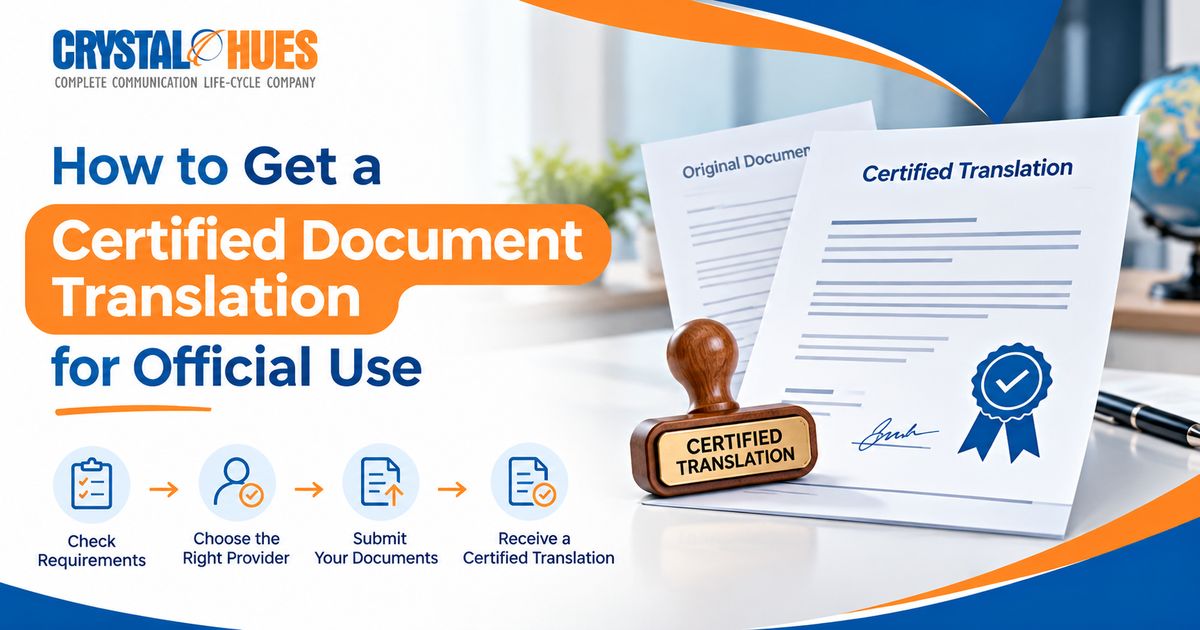
How to Get a Certified Document Translation for Official Use
Introduction
Getting a certified document translation
generally involves finding out what the receiving authority requires, choosing a
qualified provider, submitting a clear
copy of your document and receiving the translation with the required
certification statement. Requirements vary by authority, institution, country
and document type, so the first step shapes everything after it.
This guide walks through each step for people in the United States who need documents translated for immigration, education, legal, employment or other official purposes. It also explains how certified, notarized and sworn translations differ.
What Is a Certified Document Translation?
A certified translation is a translation
delivered with a signed statement from the translator or the translation
company. The statement typically confirms that the translation is complete and
accurate and that the translator is competent in both languages. Many providers
also add the date and their contact details.
Certification tells the reader who stands behind the translation. It is no guarantee that every authority will accept the document, because each recipient sets its own rules. For example, USCIS requires a full English translation that the translator has certified as complete and accurate, along with a statement that the translator is competent to translate from the foreign language into English (8 CFR 103.2(b)(3)). Other agencies, courts and schools may ask for different wording or extra steps.
Which Documents May Need Certified Translation?
Common examples include birth certificate
translation and marriage certificate translation, academic transcripts and
diplomas, and immigration records such as police clearances and civil
documents. Legal records, including court orders and contracts, often need
certified translation too, and our legal
translation services cover that area. Some financial or business records,
such as bank statements and corporate filings, may also qualify. Official
document translation can include employment letters and medical records when an
agency asks for them.
The receiving organization decides the exact requirements, so ask which documents need translation and in what form before you order.
How to Get a Certified Document Translation
Check the Receiving Authority’s
Requirements
Start with the agency, school, court or
employer that will receive the document. Ask what it accepts: a certification
statement, a particular format, notarization or something else. For document
translation for immigration, read the instructions for your specific form.
Check the current rules on the authority’s website or by contacting it
directly, because requirements change.
Prepare a Clear, Complete Copy of the
Document
Provide a legible scan or photo of every
page, including stamps, seals, handwritten notes and the back of the document
if it carries text. Make sure edges and signatures are visible. Blurry or
missing content can delay the work or lead to an incomplete translation.
Choose a Qualified Translation Provider
Look for experience with your document type
and language pair, a review step and clear communication. If you would like to
see how a project moves from intake to final review, our guide to the document
translation process explains it in detail.
Confirm Certification, Formatting,
Delivery and Turnaround
Before work starts, confirm that the
provider will include a certification statement that meets the recipient’s
needs. Ask how the translation will follow the layout of the original, whether
you need a digital file, a printed copy or both, and what timeline is
realistic. Get these details in writing.
Review the Delivered Translation and
Submit It as Instructed
Check names, dates, numbers and places
against the original, since small slips can cause delays. Confirm that the
certification statement is signed and dated. Then submit the translation
exactly as the authority instructs and keep a copy of everything.
Certified vs. Notarized vs. Sworn
Translation
These terms are related, yet they are never
interchangeable. A certified translation comes with a statement from the
translator or provider about completeness and accuracy. A notarized translation
involves a notary public, who usually verifies the identity of the person
signing a declaration and witnesses the signature. Notarization can
authenticate a signature, but it never checks the accuracy of the translation
itself.
A sworn translation is made by a translator who has been authorized or sworn in by a court or government body, a system used in some countries. The United States generally lacks a federal sworn translator system, though documents going abroad may need one, depending on the destination country. Always confirm with the recipient which version it wants.
Common Mistakes to Avoid
- Skipping the recipient’s rules and guessing what is needed.
- Sending an incomplete or unreadable copy of the original.
- Assuming notarization is always required, which can add cost
and time when it may be unnecessary.
- Overlooking names, dates and spellings, especially when
documents show different transliterations of the same name.
- Waiting too long to order, since review and certification take time and deadlines are often fixed.
How to Choose a Document Translation Provider
You
should look for language expertise in your specific pair and experience with
your document type, whether that is civil records, academic documents or legal
files. Ask how the work is reviewed, how confidential files are handled and
what delivery timeline is realistic. A good provider explains its certification
statement, answers questions clearly and keeps you updated.
If you expect to need translation more than once, explore our professional translation services to see the full range of support available.
Opportunity
According to the U.S. Census Bureau’s 2023 American Community Survey, 71.1 million people aged 5 and older in the United States spoke a language other than English at home. With such a diverse pool to target, the need for a certified document translator will be immense. US is a hub for higher education and immigrants. The opportunity is massive and businesses taking a plunge will benefit provided they follow the regulations and serve evolving needs related to document translation.
Frequently Asked Questions
What makes a document translation
certified?
A signed statement from the translator or provider confirms that the
translation is complete and accurate and that the translator is competent.
Wording and format depend on the recipient.
Does every immigration document need a
certified translation?
Under 8 CFR 103.2(b)(3), any foreign language document submitted to USCIS must
come with a full English translation and the translator’s certification.
Is notarization the same as certified
translation?
No. Notarization authenticates a signature, while certification confirms the
completeness and accuracy of the translation. Some recipients ask for both.
Can I translate an official document
myself?
Rules vary. The USCIS regulation focuses on whether the translator is
competent, and the translation is complete and accurate, but other recipients
may require an independent translator. Check with the recipient first.
How long does certified document
translation take?
It depends on length, language pair, complexity and provider workload. Ask for
an estimate with a clear delivery date and allow extra time for notarization or
shipping if you need them.
Conclusion
A certified document translation starts
with the recipient’s rules and ends with a signed translation you can submit
with confidence. Check the requirements first, send a complete copy and ask
your provider to confirm certification and delivery details in writing.
When you are ready, Crystal Hues can review
your document and respond with a clear estimate. Share your details to request a translation
quote.