Top 10 Most Spoken Languages Across Europe
Introduction
Located in the northern hemisphere, Europe
is a cosmopolitan continent with unique cultural and linguistic diversity. More
than 200 languages shaped by centuries of migration and trade give businesses an
opportunity to tap into consumer minds and languages.
Understanding which languages dominate, and where, shapes decisions across international business, healthcare communication, tourism, legal documentation, and content localization. A pharmaceutical company launching a new drug, a hospital network serving diverse patient populations, or a travel brand courting summer visitors all depend on the same foundation: speaking to people in the language they trust most.
Why Language Diversity Matters in Europe
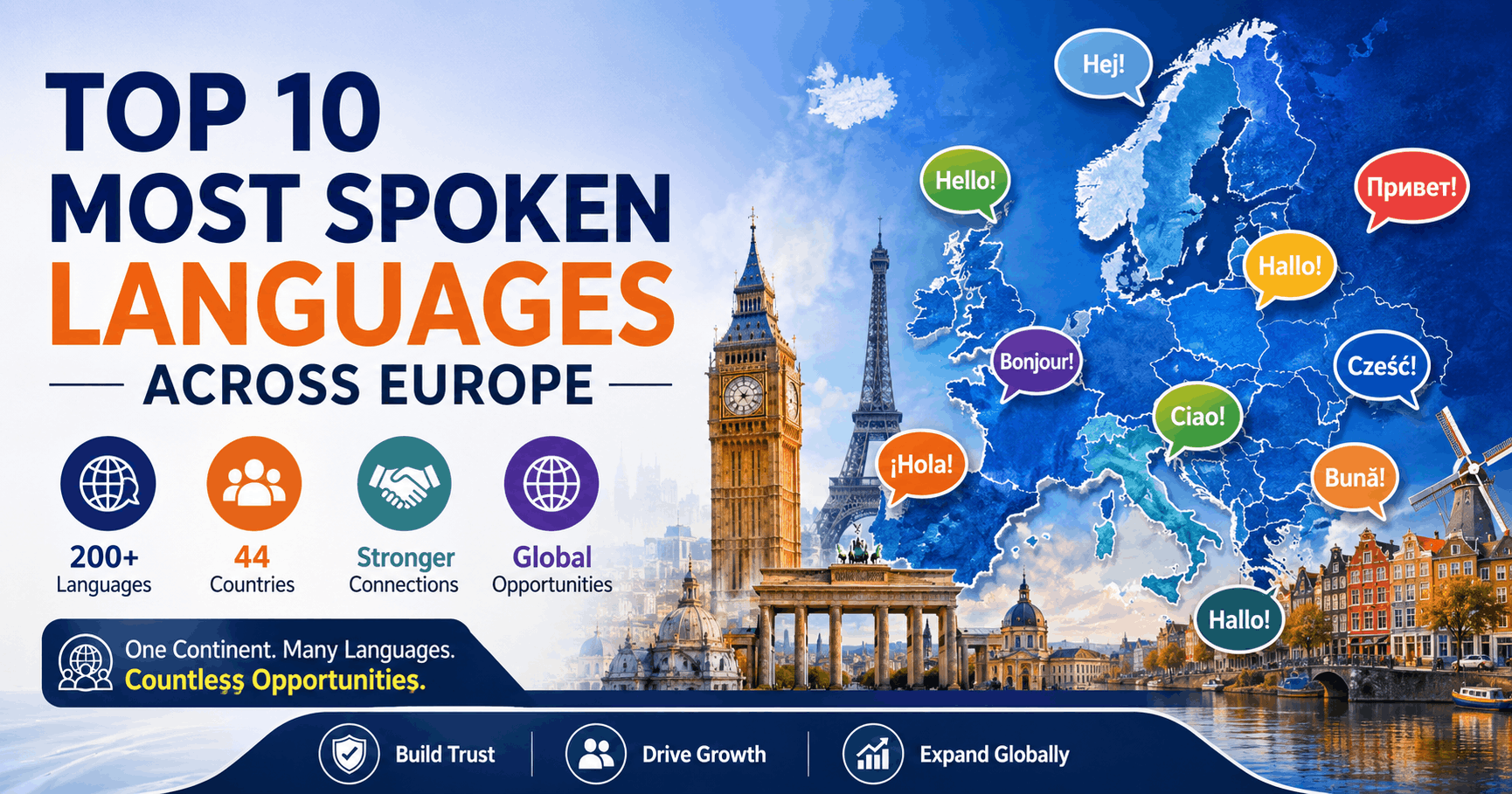
Housing 44 countries, according to the United Nations, with more than 200 spoken languages, Europe presents the full
range of diversity, ranging from major national tongues to regional and minority
languages protected under local law.
Consumer choices vary with the dialects;
their requirements and the demand create favorable conditions for different
businesses.
A business operating Europe needs to
cater to different languages and regions to enhance its profitability.
Language diversity also plays a crucial
role in cross-border trade, healthcare, legal services, education, and tourism,
where accuracy and cultural understanding are key. By embracing multilingual
communication, organizations can build stronger relationships, ensure
regulatory compliance, and successfully expand across European markets.
The multi diverse business landscape allows many players to compete for consumers who have different niches requiring to be served.
Top 10 Most Spoken Languages Across
Europe
1. Russian
With a large geographical spread, Russian is
the most spoken language across Europe with 100 million native speakers
concentrated in Russia, Ukraine, Belarus, and parts of the Baltic states and
Central Asia bordering Europe.
2. German
Fuelling Europe's economy, German is the
second most spoken language cross Germany, Austria, Switzerland, Belgium, and
Luxembourg. The attractive automobile sector plays its part in people speaking
German.
3. English
Considered as an international language,
English ranks third overall as a second language spoken across Europe. The
thriving global education institutions and the commercialized nature of English
make it one of the favourites in whole world, let alone Europe.
4. French
With around 70 to 80 million native
speakers across France, Belgium, Switzerland, and Luxembourg, and an
international footprint spanning nearly 30 countries worldwide, French hold the
fourth position.
5. Italian
Primarily concentrated in Italy, with
smaller communities in Switzerland, San Marino, and Vatican City, Italian brings around 65 million native speakers
6. Spanish
Spanish ranks among the most spoken
languages worldwide thanks to its global influence across Latin America and the
United States.
7. Polish
Polish is spoken natively by close to 40
million people, concentrated in Poland, with significant communities across the
United
Kingdom, Germany, and Ireland built through
decades of workforce mobility.
8. Ukrainian
Ukrainian has between 30 and 40 million
native speakers, concentrated in Ukraine with significant populations in
neighbouring countries. Recent years have brought growing business significance
to Ukrainian content, driven heavily by migration patterns that have placed
large Ukrainian speaking communities across Poland, Germany, and other parts of
Europe.
9. Romanian
As a member of the European Union workforce
with significant outward labor migration, Romanian carries about 24 million
native speakers, primarily across Romania and Moldova.
10. Dutch
Dutch completes the list with around 22 to 23 million native speakers across the Netherlands and Belgium. Despite its smaller speaker base, Dutch punches well above its weight in international trade.
Professional Translation Across Europe
The multi diverse business landscape of
Europe serves as a goldmine for translation companies. Companies wanting to
expand globally need the cultural coherence and native feel to connect with
their customers.
From medical and legal translation to
website and marketing localization, every industry has unique requirements.
Some require real time interpretation; some
may need cultural adaptation. Compliance first service like legal industries
also have varied requirements.
The businesses operating in Europe needs to understand its users and communicate effectively with local audiences if they want to run their businesses successfully.
In a Nutshell
The globalised world is uniquely positioned to benefit the linguistic diversity of Europe. For businesses operating across healthcare, pharmaceuticals, manufacturing, technology, tourism, and legal services, multilingual communication is no longer optional, it is a core part of how trust gets built with European audiences. Professional translation and localization turn that complexity into an advantage, helping organizations connect with patients, customers, and partners in the language and cultural context they understand best. Languages shape cultures and the businesses who leverage the multi culture society of Europe will fare better for the future.
Frequently Asked Questions
1. What is the most spoken language in Europe?
Going by native speakers, Russian tops the
chart. English, if second language is included.
2. Which language us preferred for
business purposes?
English is widely accepted for business and
global expansion.
3. How many official languages does
Europe have?
The European Union recognizes 24 official
languages, while Europe as a whole, including countries outside the union,
recognizes well over 35 national and official languages alongside hundreds of
regional and minority languages.
4. Why is localization important in
Europe?
Europe is multi diverse with people from all cultures, so localization helps in businesses targeting local markets.