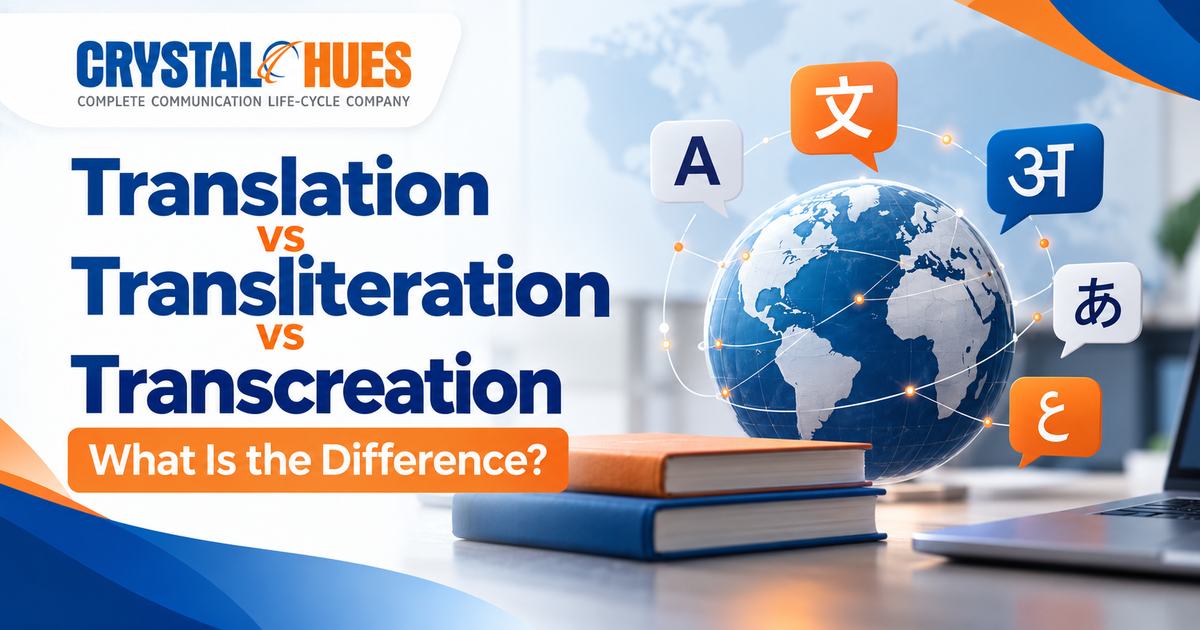
Translation vs Transliteration vs Transcreation: What Is the Difference?
Introduction
Businesses involved in multilingual
translation needs to understand the difference between translation,
transliteration and transcreation. They look similar but serves different
purpose. The real leverage lies in understanding them clearly without picking
the wrong one.
Translation changes the meaning of a text
into another language. Transliteration shows the sounds or written characters
of a word in a different script. Transcreation adapts a message creatively, so
it feels natural, and has the same emotional effect, for a new audience.
What Is Translation?
Translation converts text from language to other
without changing the meaning. It enables to cater to different markets keeping
the messaging accurate, clear and faithful to the original. For example,
the English sentence "Please read the instructions carefully" becomes
"कृपया निर्देशों को ध्यान से पढ़ें" in Hindi. The
words change, but the meaning stays the same.
Translation is used for documents,
websites, product manuals, contracts, business content and everyday user
information.
If your business needs accurate content for readers in other languages, professional translation services can help you keep the quality consistent across every document and market.
What Is Transliteration?
Transliteration does not translate meaning
at all. It writes the sounds or characters of a word using a different writing
system. Take the Hindi greeting नमस्ते. When it is
transliterated into the Latin script, it becomes namaste. Nothing is explained
or interpreted. The word is simply made readable for someone who cannot read
Devanagari.
One thing to remember is that spelling conventions can vary. A name like कृष्ण may appear as Krishna, Krushna or Krisna depending on the style used. That is why it helps to choose one spelling and stick with it everywhere.
What Is Transcreation?
Transcreation deals with creative
adaptation of a message. Instead of copying the words, the writer rebuilds the
idea so that the tone, cultural references and emotional effect work for the
target audience. Think of it as translation plus fresh creative writing.
Imagine a snack brand with the English
tagline "Fuel your afternoon rush." A direct translation may sound
awkward, or the idea of an afternoon rush may mean little in another culture. A
transcreated line could drop the original wording and build on a familiar local
habit, such as a relaxed tea break, while keeping the same energy and promise.
This is why campaigns, slogans and ads
often need more than word conversion. The translation vs transcreation question
comes up often, and the short answer is that translation protects the meaning
while transcreation protects the impact. Our marketing translation services are built for exactly this
kind of work, where the message must persuade and not just inform.
Transcreation also connects to a wider
idea. Adapting content for a target market goes beyond language. Localization
services cover things like currency, date formats, images, colours and
cultural expectations, so the whole experience feels local. If you want to read
more, this guide on localization for international markets is a useful next
step.
Translation vs Transliteration vs Transcreation: Key
Differences
All three of them differs in the function
they serve and can apply to various businesses.
- Translation: The purpose is to
carry the meaning across languages accurately. The words and language
change, while the meaning stays the same. It is commonly used for
documents, websites and manuals. Example: "Welcome" becomes
"स्वागत है".
- Transliteration: The purpose is to
make a word readable in another script. Only the script changes, and the
meaning is not touched. It is commonly used for names, addresses and
search terms. Example: नमस्ते becomes namaste.
- Transcreation: The purpose is to
create the same feeling and response in a new audience. The words, tone
and sometimes the whole idea change. It is commonly used for taglines,
campaigns and ads. Example: a slogan rewritten around a local custom
instead of a literal copy.
A simple way to remember it: translation moves meaning, transliteration moves sound, and transcreation moves the feeling.
When Should You Use Each One?
The right choice depends on what your
content needs to do. Here are some common situations.
- Use translation when accuracy
matters most. Think of product instructions, legal notes, help articles,
reports and company information.
- Use transliteration when you need a
name, a brand or a search term to be readable in another script. It also
helps when people look for your business by typing words in a different
script.
- Use transcreation when you want
people to feel something or act. Taglines, ad campaigns, social media
posts and launch messages usually fall in this group.
Multilingual websites are a good example of
how these mix. Product pages and policies need clear translation, while the
homepage banner may need a creative touch. If you are planning to reach readers
in more than one language online, website
translation services can help you handle the full site in a consistent way.
How to Choose the Right Language Solution
Start by asking a few simple questions:
- What should this content achieve? Inform, guide, or persuade.
- How much creative freedom is acceptable? Should the wording
stay close to the original, or can it change?
- What matters most: accuracy, pronunciation and script, or
emotional impact?
If the answer is accuracy, go with
translation. If it is readability in another script, go with transliteration.
If it is persuasion and cultural fit, go with transcreation.
Keep in mind that one project may use more than one approach. A single campaign can include translated product details, transliterated brand names and a transcreated headline.
Frequently Asked Questions
What is the main difference between
translation and transliteration?
Translation and transliteration differ in
the meaning. The former one changes it; the latter one only changes the script
or spelling so that it can be pronounced in another writing system with ease.
Is transliteration the same as
translation?
No. They are different in their usage.
Example: "नमस्ते" gives you
"hello" or "greetings", while transliterating it gives you
"namaste". One carries the meaning, and the other carries the sound.
What is transcreation in marketing?
Transcreation is the creative rewriting of
marketing content for a new audience. It keeps the intent, tone and emotional
effect of the original, but may change the words, images or references so the
message feels natural locally.
When should a business use transcreation
instead of translation?
Businesses should use transcreation for marketing requirements where they need slogans, ad campaigns, brand messages. Translation is for professional and accurate messaging.
Can a project require translation,
transliteration and transcreation together?
Yes, and this is quite common. A product launch, for instance, may need translated specifications, a transliterated brand name and a transcreated tagline, all working together.
Conclusion
The future of translation industry is
multilingual and hyper localization. Understanding the differences between
translation, transcreation and transliteration can make a real difference for companies
ruling this industry.
Understanding translation vs
transliteration vs transcreation helps you pick the right approach for each
piece of content and avoid costly mistakes. If you are planning a multilingual
project and want to talk through the best option, get in touch with the team at
Crystal Hues.
We would be happy to help.