ePI - Understanding Its Role in Pharmaceutical Translation in EU
Introduction
The
diffusion of tech in pharmaceutical industries is paving new ways for
advancement in accessibility and translation of medical information.
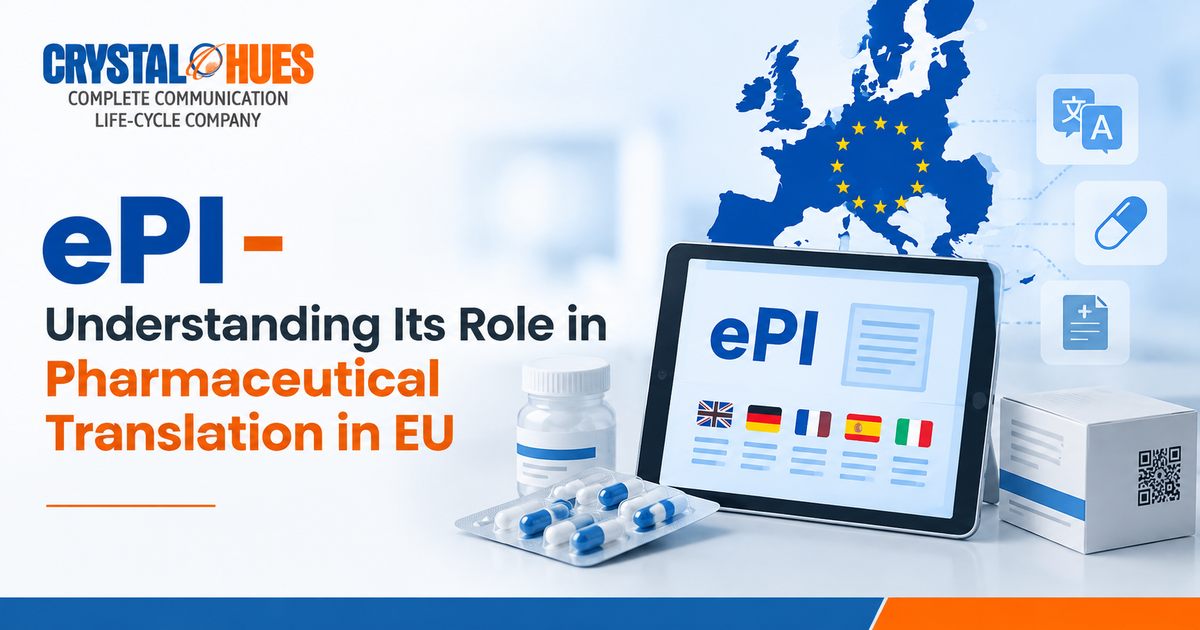
Across Europe, it is moving from paper to digital formats, and this shift has a name: ePI, or electronic Product Information. As pharmaceutical companies adapt to this change, one question keeps surfacing among regulatory and life sciences teams: how does multilingual translation fit into an increasingly digital, structured system of medicine information? This article breaks down what ePI means, why it matters across the EU, and where pharmaceutical translation enters the picture.
What Is ePI (Electronic Product
Information)?
ePI stands for electronic Product
Information. It refers to the digital version of the official information
that accompanies an authorised medicine, replacing or supplementing the printed
leaflet found inside a medicine box.
ePI generally includes:
- The Summary of Product Characteristics (SmPC)
- The package leaflet given to patients
- Labelling text that appears on packaging
Rather than existing as a static PDF or printed insert, ePI is built using structured, machine-readable formats. This structure allows the same content to be updated, searched, and displayed consistently across digital platforms, from hospital systems to patient facing apps. In simple terms, ePI turns medicine information into a living digital document rather than a fixed printed page.
Why Is ePI Important for the EU
Pharmaceutical Industry?
Having dozens of official languages and
linguistically diverse pharmaceutical markets at its disposal, EU become one of
the central markets for ePI. It helps in maintaining a legally accurate record
of medical information that can easily be accessed by different, member states.
Because ePI is digital and structured, it
supports faster updates when safety information changes, easier searchability
for healthcare professionals, and better accessibility for patients who rely on
screen readers or translated formats. It also reduces the physical constraints
of printed leaflets, where space limits how much information can be included in
multiple languages at once.
For an industry that serves patients across so many languages and regulatory environments, ePI represents a practical step toward more consistent and current medicine communication.
What Role Does Pharmaceutical
Translation Play in ePI?
This is where pharmaceutical translation
becomes central to the ePI conversation. Since ePI is designed to serve
patients and professionals across every EU member state, the underlying content
must exist in multiple languages, and it must say the same thing accurately in
each one.
ePI translation involves far more than
converting words from one language to another. Medicine information carries
clinical and regulatory weight, so terminology must stay consistent across
every version, whether the document describes dosage instructions, side
effects, or storage conditions. A phrase that reads clearly in English can lose
precision if translated loosely into another language, which is why
pharmaceutical translation depends on subject matter familiarity alongside
linguistic skill.
Because ePI content is structured rather than free form, translation teams also need workflows that respect that structure. Fields, headings, and repeated terms must align across languages, so the digital system continues to function correctly once translated content is inserted. Life sciences organisations working with medical translation services often build this structural awareness into their translation and review process from the start.
ePI vs Traditional Pharmaceutical
Documents
Traditional pharmaceutical documents, like
a printed leaflet or a PDF upload, exist as fixed files. Once printed or
published, updating them usually means reprinting, reuploading, or waiting for
the next review cycle.
ePI comes in structured formats; individual
sections can be updated without recreating the entire document. This has a
direct impact on translation workflows too. Instead of retranslating an entire
leaflet for a single dosage update, structured ePI allows translation teams to
work on specific fields or sections, which can shorten turnaround time and
reduce the chance of inconsistent updates across languages.
The efficiency and simplicity in interpretation and integration of ePI with pharma companies’ translation workflows make it a natural choice helping its accurate expansion.
What Should Companies Consider
When Translating ePI Content?
While translating ePI content, pharma
companies should be wary of few things listed below.
- Terminology consistency: The same
medical and regulatory terms should read identically across every language
version.
- Linguistic accuracy: Translators
working on medicine content benefit from familiarity with pharmaceutical
and regulatory language, since small wording differences can change
meaning.
- Structured content compatibility:
Translation workflows should support the structured, field-based nature of
ePI rather than treating it as flat text.
- Regulatory context: Translated
content should reflect the current, approved version of the source
document at every stage, which is why many teams pair pharmaceutical
translation with legal translation services for
regulatory documentation.
- Technology and CAT tool compatibility: Translation memory and terminology databases help maintain
consistency across large volumes of regulatory content.
- Version control and review: A clear
review process helps catch discrepancies before translated ePI content
goes live across markets.
None of these steps guarantee regulatory compliance on their own, since compliance depends on the full regulatory process a company follows. Careful translation practice does, however, support accuracy and consistency, which are central to how ePI is meant to function.
Conclusion
ePI represents a shift toward digital, structured medicine information built for a multilingual environment like the EU. As this format becomes more common, pharmaceutical translation plays a growing role in keeping that information accurate and consistent across languages. Companies exploring ePI content are increasingly reviewing partnerships to make sure multilingual accuracy keeps pace with digital transformation. Crystal Hues supports pharmaceutical and life sciences teams navigating exactly this kind of multilingual content work.
Frequently Asked Questions
What is ePI in the EU pharmaceutical
industry?
ePI simply means digital versions of
medical information.
Why
is ePI important for pharmaceutical companies?
ePI is important because it helps the
consumers update with accurate medical information and expand its accessibility
to different markets within the EU.
What role does translation play in ePI?
Accuracy and consistency is maintained
among multilingual content with the help of translation.
How
is ePI different from a traditional PDF?
ePI
uses structured, field-based formats that allow specific sections to update
independently, while traditional documents require full reprints or reuploads
for any change.
Why is accurate pharmaceutical
translation important for ePI?
ePI has sensitive information with contains
regulations, dosage instructions across different languages. Given its usage
amongst consumers, accuracy matters.