What Is Translation and Transcription? Understanding the Difference
Introduction
Translation transfers meaning from one
language into another, while transcription converts spoken or audio content
into written text. The two get confused often because both deal with language
and both support similar business needs, yet they solve different problems.
This article breaks down what each term means, how the two compare, and when a
business needs one, the other, or both.
What Is Translation?
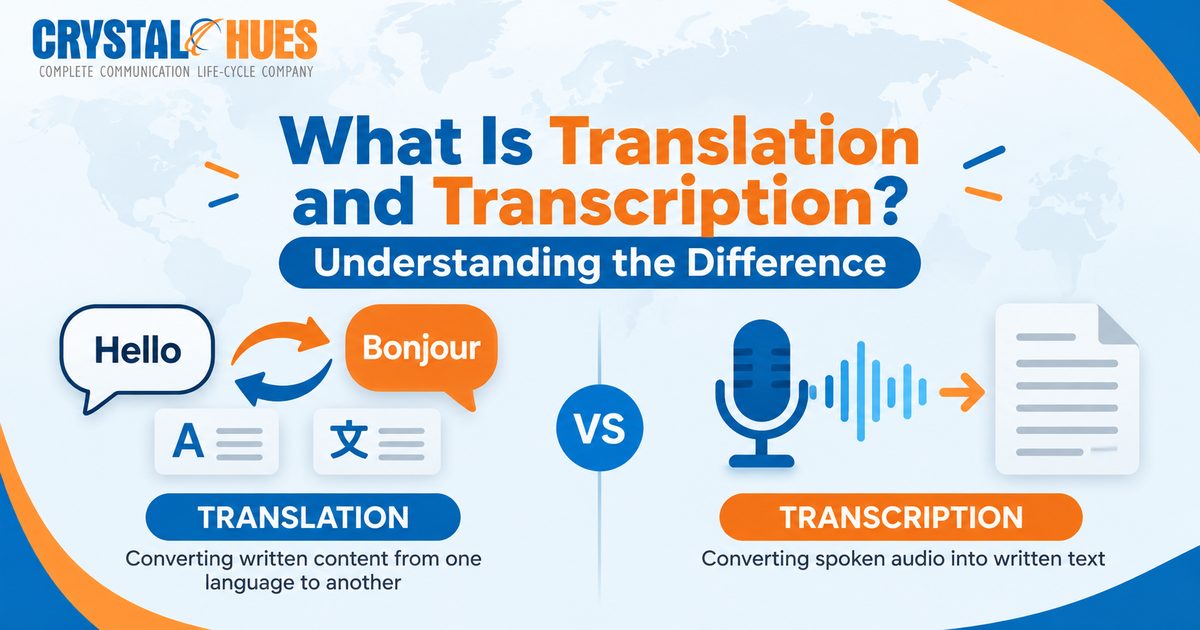
In simple words, Translation means to
convert written content to another language while preserving tone and intent.
Language translation includes accounting for grammar, cultural context and industry terminology, so the result reads as though it were written in the target language from the start. Skilled translation is a key requirement in industries such as medical or legal as that require subject matter expert. So, translation encompasses the real meaning that audiences can connect to with accuracy. Businesses expanding into new markets rely on translation services to adapt everything from contracts to marketing content for a new audience.
What Is Transcription?
Transcription handles conversion of spoken
audio or video content into written text; in the same language it was
originally spoken. A recorded interview becomes a written transcript. A
doctor's dictated notes become a formatted written record.
Unlike translation, transcription keeps the language unchanged. Audio transcription and video transcription both aim to capture spoken words accurately, along with relevant details like speaker labels, timestamps or formatting depending on the use case. Businesses across legal, medical and media industries use transcription services to turn recorded content into searchable, referenceable written records.
Translation vs Transcription: What Is the Difference?
It is very important to understand the
nuances between them as they both are used together most of times in same
industries. Translation changes the language while keeping the format largely
similar, working from written or spoken source content and producing content in
a different language. Transcription keeps the language the same while changing
the format, working from audio or video source content and producing a written
record in that same language.
Some of the translation use cases include contracts, websites, marketing material and multilingual content for global audiences. Common transcription uses cases include interviews, meetings, medical dictation, legal proceedings and video content that needs a written record.
How Do Translation and
Transcription Work?
Both have a defined and structured workflow
that can be applied to any business.
In Translation, firstly the source content
gets drafted, researched an analysed for context and terminology. Then, the
translator converts into the target language. At last, come the reviewer who checks
against accuracy and delivers the final content.
Transcription involves a human transceiver
as audio or video content needs to be reviewed. They convert audio to text with
help of speech recognition tools where the draft gets formatted with speaker
labels or timestamps where needed, and a proofreading pass checks accuracy
before delivery.
Human review at the final stage matters in both processes, since automated tools alone can miss context, accents or industry specific terms.
Types of Translation and
Transcription
Translation spans several specialised
categories, including document translation , website translation, legal
translation, medical translation, technical translation , eLearning translation,
marketing translation and book translation, each requiring familiarity with the
relevant subject matter.
Transcription covers a similarly wide
range, including general transcription, legal transcription, medical
transcription, financial transcription, eLearning transcription, IT
transcription, marketing transcription and media or video transcription. The right
category depends entirely on the source content and how accurate, formatted or
specialised the final text needs to be.
Translation and Transcription:
When Do You Need Each?
A business expanding into a new country and
adapting its website, contracts or marketing content needs translation. A
business that recorded a conference session, a customer interview or an
internal meeting and wants a written, searchable record needs transcription. A
media company producing multilingual video content or a legal team handling
international depositions often needs both, transcribing the original audio
first and translating the resulting text afterward.
Human vs AI or Machine
Translation and Transcription
Machine translation and automated
transcription have both improved considerably and work well for quick drafts,
informal content or high-volume material where perfect accuracy matters less.
Human translation and human transcription still tend to outperform automated
tools on nuance, context, idiomatic language and specialised terminology,
particularly in legal, medical and technical content where a small error
carries real consequences.
Depending on the usability, many businesses combine both by using automated tools for an initial draft, followed by human review for accuracy and context. This balances speed against quality depending on what the content needs.
Benefits of Professional
Translation and Transcription Services
Global business is expanding as globalisation is fuelled by the tech and connectivity of 21st century world. So, working with a professional translation agency or transcription company brings structured quality control, subject matter expertise and consistent formatting that ad hoc or fully automated approaches often lack. Certified translation matters for legal or official documents, while accurate medical transcription and legal transcription matter wherever precision affects real outcomes. Beyond individual documents, businesses managing content across several markets often pair translation with localization services to adapt tone, formatting and cultural references for each specific audience.
FAQs
What is translation and transcription?
Translation converts written content into
different language and transcription converts spoken audio or video into
written text within the same language.
What is the difference between
translation and transcription?
Difference
lies in the language conversion as translation changes the language of the
content. Transcription changes the format, from spoken to written, while
keeping the language the same.
Is transcription the same as
translation?
No. Transcription stays within one
language, while translation moves content between two.
Can audio be translated and transcribed?
Yes.
Audio content is often transcribed first into written text, then translated
into another language if needed.
Is human translation better than machine
translation?
For
nuanced, specialised or high stakes content, human translation generally
outperforms machine translation on accuracy, context and tone.
Conclusion
Translation and Transcription solve different problems even though they often get mentioned together. Translation moves meaning across languages, while transcription moves spoken content into written form within the same language. Understanding which one a project needs, or whether it needs both, makes it easier to plan accurate, professional multilingual content from the start. Crystal Hues supports both translation and transcription needs for businesses working across languages, formats and industries.